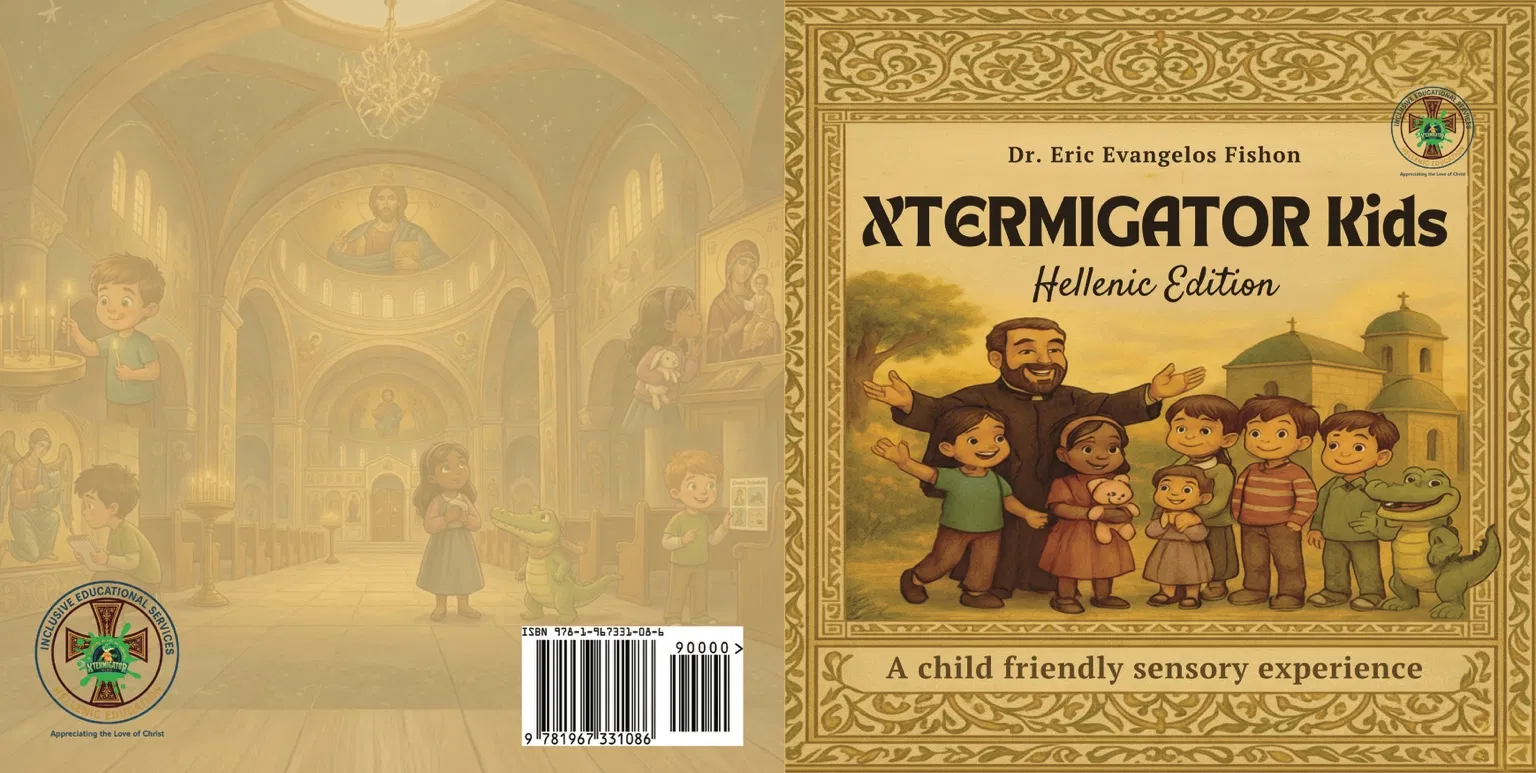
Every child deserves to experience church as a place of safety, belonging, prayer, and joy. For some children, however, the sounds, lights, crowds, transitions, language, or expectations of church and Sunday school can create real barriers to participation.
That does not mean a child is unwilling, disrespectful, or incapable of learning. It may mean the environment is asking more than their body, brain, or communication system can manage at that moment.
A thoughtful special needs church ministry does not require a perfect building, a large budget, or a separate program. It begins with a compassionate shift in perspective:
Instead of asking, “How do we make this child fit?” we ask, “How can we remove barriers so this child can belong?”
Our five-step framework (Notice, Prepare, Welcome, Partner, and Review) gives clergy, Sunday school teachers, and ministry volunteers a simple way to begin. We can start this Sunday with one family, one classroom, and one conversation. 💛
1. Notice: Look Beyond Behavior
Pause, breathe, and ask what the child may be communicating
The first step in neurodiverse church ministry is noticing what is happening beneath the surface.
A child who leaves the room, covers their ears, refuses an activity, becomes very quiet, or struggles during transitions may be communicating:
- “The room is too loud.”
- “I do not know what will happen next.”
- “The instructions are hard to understand.”
- “I am tired, hungry, anxious, or overwhelmed.”
- “I need a different way to communicate.”
- “I need movement before I can listen.”
- “I need a break, not a correction.”
This does not mean every behavior has one simple explanation. It does mean we can respond with curiosity rather than shame.
Try a gentle ministry observation
Before changing everything, walk through the child’s experience from arrival to departure. Notice:
- Volume, echoes, bells, chanting, or sudden sounds
- Bright lights, candles, incense, or strong fragrances
- Crowding at entrances, hallways, or Communion lines
- Waiting without clear information
- Fast transitions between activities
- Instructions given only verbally
- Seating arrangements that do not allow movement or quiet
- Activities requiring speech, writing, fine-motor skills, or eye contact
You can also ask families:
- “What parts of church feel easiest for your child?”
- “What moments are usually difficult?”
- “What helps your child feel safe?”
- “How does your child show us they need a break?”
- “What is a comfortable way for them to participate?”
Families are not visitors to an inclusion plan. They are essential partners in understanding the child.
A gentle reminder: Behavior is often a message. When we look closer, we find a path toward connection.
2. Prepare: Make the Path Predictable
Offer clear information before asking for participation
Preparation lowers uncertainty. It gives children and families a way to know what is coming before they enter a busy classroom or sanctuary.
A few practical christian education resources can make a meaningful difference:
- A picture or written schedule
- A simple map of the church or classroom
- A preview of expected sounds, smells, and movements
- A clearly identified quiet area
- Flexible seating, including a place near an exit
- Noise-reducing headphones or other sensory tools
- A visual “first, then” card
- Short instructions presented one step at a time
- A choice of speaking, pointing, drawing, signing, typing, or using AAC
For Sunday school, a schedule might say:
- Welcome
- Prayer
- Story
- Movement break
- Choice activity
- Closing blessing
For Divine Liturgy, families may appreciate a child-friendly visual guide showing major moments such as singing, Scripture, incense, processions, Communion, and dismissal.
The goal is not to make worship mechanical or remove its mystery. The goal is to help children anticipate what is happening so they can participate with greater peace.
The parish inclusion guide offers practical ideas for visual information, seating choices, quiet spaces, flexible participation, and volunteer preparation.

Prepare volunteers with simple language
Volunteers do not need to know every diagnosis or have a perfect response. They do need a calm, respectful plan.
Teach phrases such as:
- “It looks like this is hard right now.”
- “You can take a break.”
- “Would you like to point or show me?”
- “First we will sit here, then we can look at the picture.”
- “You can join in this way.”
- “You are safe. We can go slowly.”
Avoid public correction, forced eye contact, or demands that a child “act normal.” A calm voice, fewer words, and extra space can help a child regulate.
A gentle reminder: Predictability is a form of hospitality. When children know what to expect, they have more room to receive, learn, and pray.
3. Welcome: Make Belonging Visible
Say, “We expected you. We are glad you are here.”
A welcoming ministry does more than permit a family to attend. It communicates that the family is wanted and that the child’s presence strengthens the church community.
This can begin with the first message, registration form, or conversation:
“Children with disabilities, sensory sensitivities, communication differences, and different learning styles are welcome here. Please tell us how we can support your family.”
At arrival, offer a consistent greeting when possible. Show the child where to place belongings, where the class will happen, and what will come first. A familiar volunteer can reduce the stress of entering a new or unpredictable space.
Welcome also means allowing flexible participation. A child may:
- Stand, sway, or move quietly
- Draw while listening
- Use a fidget or comfort object
- Wear headphones
- Step out and return
- Join only part of an activity
- Answer by pointing or choosing a picture
- Watch before participating
- Participate without speaking
These are not lower standards. They are different pathways toward engagement.

In an inclusive Sunday school, we can design lessons with multiple entry points. Children might see a picture, hear a story, touch an object, act out a movement, draw a response, or choose between two options.
A gentle reminder: Participation is not one shape. Every sincere way of joining is worthy of welcome.
4. Partner: Honor Family Knowledge
Replace defensiveness with collaboration
Families of neurodiverse children are often asked to explain, justify, or defend their child’s needs. A compassionate special needs church ministry changes that experience.
Instead of beginning with a list of problems, begin with relationship:
- “What does your child enjoy?”
- “What helps them feel calm?”
- “How do they communicate yes, no, more, finished, or help?”
- “What should we notice before they become overwhelmed?”
- “What would you like us to do if the room becomes too much?”
- “How can we contact you respectfully?”
Write down only what the family wants the ministry team to know, protect privacy, and share information on a need-to-know basis. A brief support plan might include sensory preferences, communication methods, transition supports, medical considerations, and the names of trusted contacts.
Partnership also means asking the child, when possible. Offer choices rather than assuming:
- “Quiet corner or hallway?”
- “Crayons or blocks?”
- “Listen or draw?”
- “Sit here or near the door?”
Choice restores dignity and gives children a meaningful role in their own participation.
The inclusive lesson planner can support teachers in building visual, hands-on, and flexible options into faith formation.
A gentle reminder: Families know their children deeply. When we listen together, ministry becomes more humane, practical, and faithful.
5. Review and Improve: Keep Learning Together
Choose one small change, then notice what happens
Inclusion is not a one-time project. It is a practice of listening, trying, reflecting, and improving.
After a Sunday, ask:
- What helped the child participate?
- When did stress begin to rise?
- Were the instructions clear?
- Was the quiet space easy to access?
- Did the family feel respected?
- What is one small change we can try next time?
Do not treat a difficult day as failure. A child may be tired, unwell, adjusting to a change, or carrying challenges we cannot see. Review with compassion, not blame.
A parish team might choose one improvement each month:
- Add a visual schedule
- Create a calm corner
- Train greeters in inclusive language
- Offer a quiet seating option
- Preview special services for families
- Add movement choices to Sunday school
- Invite feedback after a first visit
- Include neurodiverse children in meaningful classroom roles
The parish resources page provides additional practical tools for welcome checklists, family forms, lesson planning, and implementation.
For faith formation connected to Orthodox tradition, the Saints & Name Days collection offers activities children can approach through reading, listening, pointing, drawing, writing, praying, or talking with a trusted adult.

A gentle reminder: Small improvements, repeated with love, become a culture of belonging.
Start This Sunday: One Family, One Classroom, One Conversation
We do not have to solve every barrier before we begin. We can start gently:
- Notice one moment that may be communicating stress.
- Prepare one visual, sensory, or transition support.
- Welcome one child with a clear choice.
- Partner with one family conversation.
- Review what helped and choose the next small step.
A parish that practices these steps makes room for children to learn, worship, move, communicate, rest, and return without shame.
That is the heart of inclusive Sunday school and faithful neurodiverse church ministry: not changing the love of the Church, but removing barriers that keep children from experiencing it.
Different is beautiful. Every child belongs. Together, we can build a church where every family can pause, breathe, listen, and come home. 💜
Further Reading
- XTERMIGATOR Kids Hellenic: Parish Inclusion Tools
- XTERMIGATOR Kids Hellenic: Saints & Name Days
- Baylor Center for Disability and Flourishing: The Changing Landscape of Disability Ministry
- Christian Reformed Church: Including People with Disabilities in Church Life
- Lausanne Movement: Opportunities for People with Disabilities
Leave a Reply